
Pest Control · Wasps & Stinging Insects
Wasp & Hornet Control in Omaha, NE
A wasp nest by the front door or a yellowjacket nest in the ground turns a backyard into a no-go zone fast — and a bad reaction is a real risk. Scott's Pest Control removes stinging-insect nests safely and helps keep them from coming back.
Serving Omaha, Elkhorn, Papillion, Bellevue, Gretna, La Vista, Bennington, Millard, Ralston, and Valley, NE.
Wasps & Stinging Insects in Omaha
Local Wasp Control That Actually Lasts
Omaha's common stinging insects are paper wasps (open, umbrella-shaped nests under eaves and soffits), yellowjackets (aggressive, often nesting in the ground or wall voids), and bald-faced hornets (large gray football-shaped nests in trees and on structures). Activity builds through summer and peaks in late summer and early fall, right when nests are largest and colonies are most defensive.
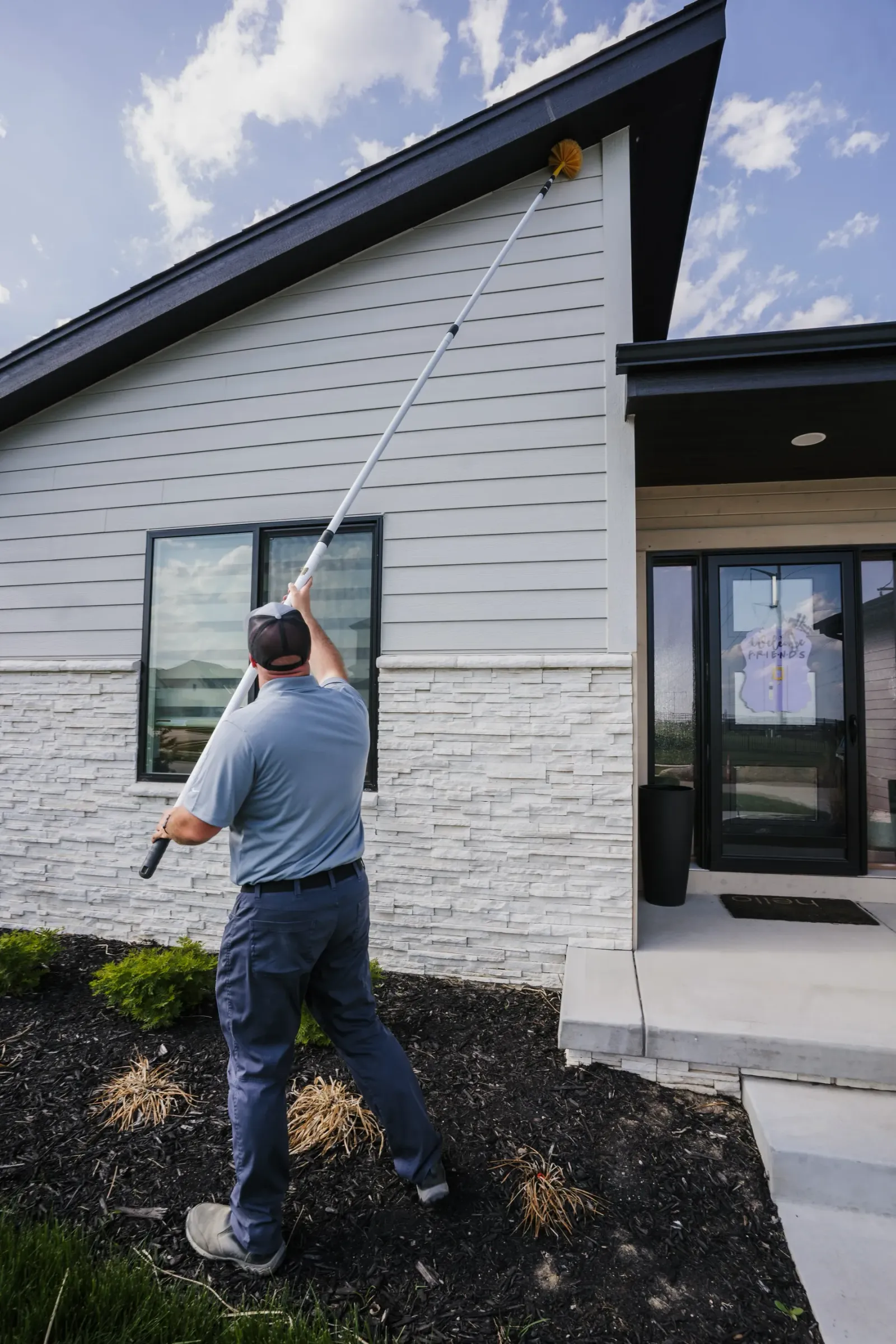
Knocking down a nest yourself is how people get stung — disturbing a colony provokes it, and yellowjackets in particular can sting repeatedly. Scott's treats and removes nests safely, addresses the eaves, soffits, and voids where they build, and can set up preventive exterior service so new nests are far less likely around the spaces your family uses.
- Stinging-insect activity peaks in Omaha in late summer and early fall.
- Eaves, soffits, gutters, and deck areas are prime paper-wasp real estate.
- Yellowjackets often nest hidden in the ground or wall voids — hard to reach safely.
- Late-season colonies are largest and most defensive, raising sting risk.
Warning Signs
Signs You Have a Wasp Problem
Catching wasps & stinging insects early makes control faster and easier. Watch for these.
Visible Nests
Umbrella-shaped paper wasp nests under eaves, or large gray hornet nests in trees, shrubs, or on the house.
Ground or Wall Traffic
Steady in-and-out wasp traffic at a hole in the ground, a wall void, or a soffit gap often means a hidden yellowjacket nest.
Increased Activity Around Eaves
Wasps patrolling soffits, deck rails, gutters, and doorways, especially in late summer.
Repeated Encounters Outdoors
Getting buzzed in the same area of the yard usually points to a nearby nest.
How We Treat Wasps & Stinging Insects
Scott's Wasp Control Process
Locate the Nest
We identify the species and find the nest — including hidden ground and wall-void yellowjacket nests.
Treat & Remove Safely
Nests are treated and removed with the right equipment so the colony is eliminated without provoking stings.
Address Harborage
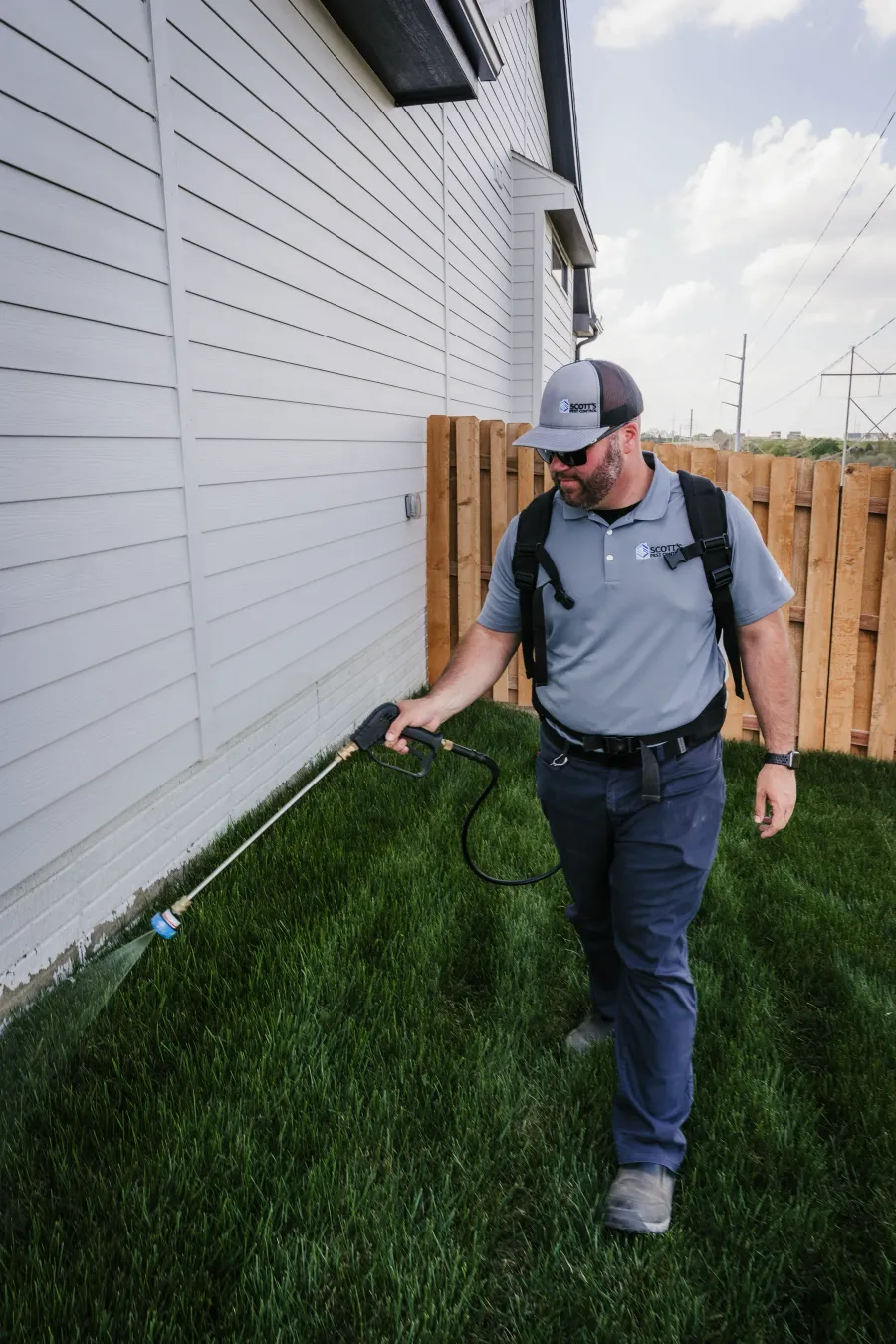
We target the eaves, soffits, and voids where stinging insects prefer to build.
Prevent New Nests
Preventive exterior service makes the spaces you use far less attractive for rebuilding.
Request Service
Get Rid of Wasps & Stinging Insects for Good
Tell Scott's what you're seeing and we'll follow up with the right plan for your Omaha-area home or business.
Request received — thank you!
Your request just landed with Scott’s Pest Control. We’ll review the details and follow up soon using your preferred contact method. A confirmation email is on its way to your inbox.
Need help right now? Call (402) 650-8460.
More Pest Control
Dealing With Other Pests Too?
Scott's Pest Control handles the full range of Omaha pests.
Wasp Control FAQ
Common Questions About Wasps & Stinging Insects
Is it safe to knock down a wasp nest myself?
It's risky. Disturbing a nest provokes the colony, and yellowjackets and hornets can sting repeatedly and call in reinforcements — a serious problem if anyone in the home is allergic. Professional removal uses the right products and equipment to eliminate the colony without the swarm.
When are wasps and hornets worst in Omaha?
Colonies grow all summer and peak in late summer and early fall, when nests are largest and the insects are most defensive and food-focused. Treating earlier in the season, when nests are small, is easier and safer.
How do I keep wasps from rebuilding in the same spot?
After removal, we treat the eaves, soffits, and voids they favor, and preventive exterior service discourages new nests. Sealing gaps and reducing food sources around patios helps too.
Go Pest Free
Ready to Get Rid of Wasps & Stinging Insects in Omaha?
Tell Scott's Pest Control what you're seeing and get a clear plan to eliminate wasps & stinging insects — and keep them gone.